Most likely, some of the keywords that trigger the OneBox are displayed on this page. Google Health's articles combined information licensed from reputable sources with information from scholar papers, news articles and other web pages.


One of the most exciting and innovative parts of Google Health is our platform strategy. We're assembling a directory of third-party services that interoperate with Google Health. Right now, this means you'll be able to automatically import information such as your doctors' records, your prescription history, and your test results into Google Health in order to easily access and and control your data. Later, this platform strategy will mean that you will be able to interact with services and tools easily, and will be able to do things like schedule appointments, refill prescriptions, and start using new wellness tools.


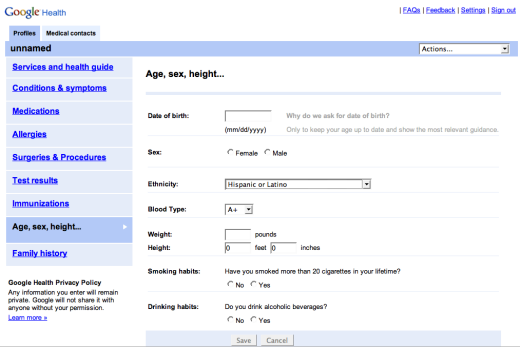
A prototype of Google Health, which the company has shown to health professionals and advisers, embodies the consumer-centered philosophy. The welcome page reads, "At Google, we feel patients should be in charge of their health information, and they should be able to grant their healthcare providers, family members, or whomever they choose, access to this information. Google Health was developed to meet this need."
A presentation of screen images from the prototype - which two people who received it showed to a reporter - then has 17 other Web pages including a "health profile" for medications, conditions and allergies; a personalized "health guide" for suggested treatments, drug interactions and diet and exercise regimens; pages for sharing information, receiving reminder messages to get prescription refills or visit a doctor, and pages to access directories for nearby physicians and specialists.
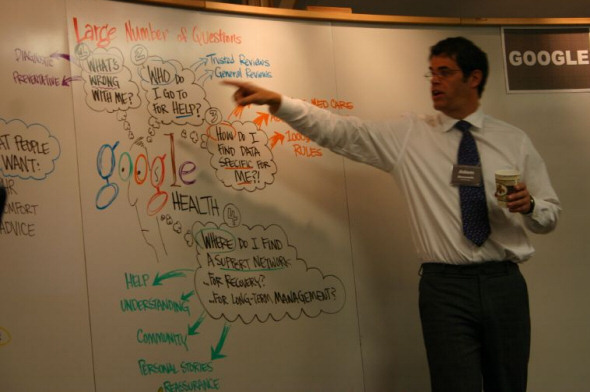
 Health is a complicated subject: usually you care about it only when there's something wrong. Google's Adam Bosworth realized people aren't in control of their own health information.